What Are NFL Side Bets? The UK Punter’s Guide to Proposition Betting
 Available in US
Table of Contents
- The side-bet shortcut for time-pressed punters
- What a side bet actually is, and why we call it that
- Side bets versus the markets you already know
- The three families of side bet: player, game and team
- The side-bet markets UK punters actually back
- The Super Bowl: where side bets take over
- How big this all is, and why Britain caught the bug
- Legal, licensed and keeping it in check
- Placing your first side bet, start to finish
- NFL Side Bet Payout Calculator
- Questions UK punters ask me about side bets
- Where the smart money goes from here
By NFL Props & Side-Bet Analyst
The first time an American mate asked me which “props” I was on for the Super Bowl, I genuinely thought he meant the punditry. Six years of trading NFL markets for a British audience later, I can tell you the confusion runs both ways across the Atlantic, and it all comes down to one word. In the United States, a bet that doesn’t hinge on who wins is a “proposition bet”, a “prop”. Over here, the same wager is a “side bet”, and half the time we don’t even bother separating it from the main match odds.
That gap is the whole reason this page exists. A side bet is any wager that sits to the side of the final result, a bet on a thing that happens inside the game rather than the outcome of the game itself. Will a particular receiver clear 60 yards? Will the first points come from a touchdown or a field goal? What colour will the Gatorade be when the winning coach gets drenched? None of those care who lifts the trophy. They all care about a slice of the action, and that slice is where most of the fun, and a surprising amount of the value, lives.
If you remember one thing, make it this: a “side bet” and a “prop bet” are the same animal wearing two passports. Paddy Power’s own betting desk puts it plainly, that in the UK and Ireland we tend to call props “side bets”, or not draw a line between them and the match odds at all. American writers say prop. We say side. The market is identical.
Here’s the problem I kept running into when I’d point newcomers toward existing guides. Every article was written by someone who either wanted to sell you a welcome bonus or assumed you already think in plus-money and minus-money. The prices came in dollars and a strange notation like minus 110. The terminology was American. Nobody bothered to translate “spread” into “handicap” or explain that a 10/11 price and a minus-110 price are the exact same bet. So I wrote the translation myself, and that is what you’re reading now: a UK punter’s full map of NFL side bets, the markets, the maths, the law, and how to place one without making the rookie mistakes I made for two seasons straight. Eighteen and over only, and I’ll keep nudging you toward keeping it sensible throughout, because that part is not optional.
The side-bet shortcut for time-pressed punters
- A “side bet” is just the British name for a prop, a wager on something inside the game that doesn’t depend on the final score.
- They sort into three families: player, game and team. Learn that and the whole menu makes sense.
- On the Super Bowl, more than half of all money staked lands on side bets rather than the result.
- Anytime touchdown scorer is the market to learn first; minus 110, 10/11 and 1.91 are the same price in three formats.
- Bet only with a UK Gambling Commission licensed operator, 18 and over, within a limit you set in advance.
What a side bet actually is, and why we call it that
Picture a Sunday afternoon, the Chiefs are three scores up with eight minutes left, the match is dead, and yet four of my open bets are still very much alive. That’s the moment the penny drops for most people. The result was decided long ago, but I’d backed a tight end to grab a late touchdown and a running back to top 70 rushing yards, and neither of those depends on the scoreboard reading. That separation, between the result and everything else, is the cleanest definition of a side bet I can give you.
A side bet is a wager on something that occurs during a match without being tied to which team wins or by how much. The moneyline asks “who wins”. The handicap asks “who covers”. A side bet asks something else entirely: how many, who first, will it happen at all. Because the outcome floats free of the final score, you can be wrong about the winner and still collect, or right about the winner and still lose your side bet. They are independent layers stacked on the same game.
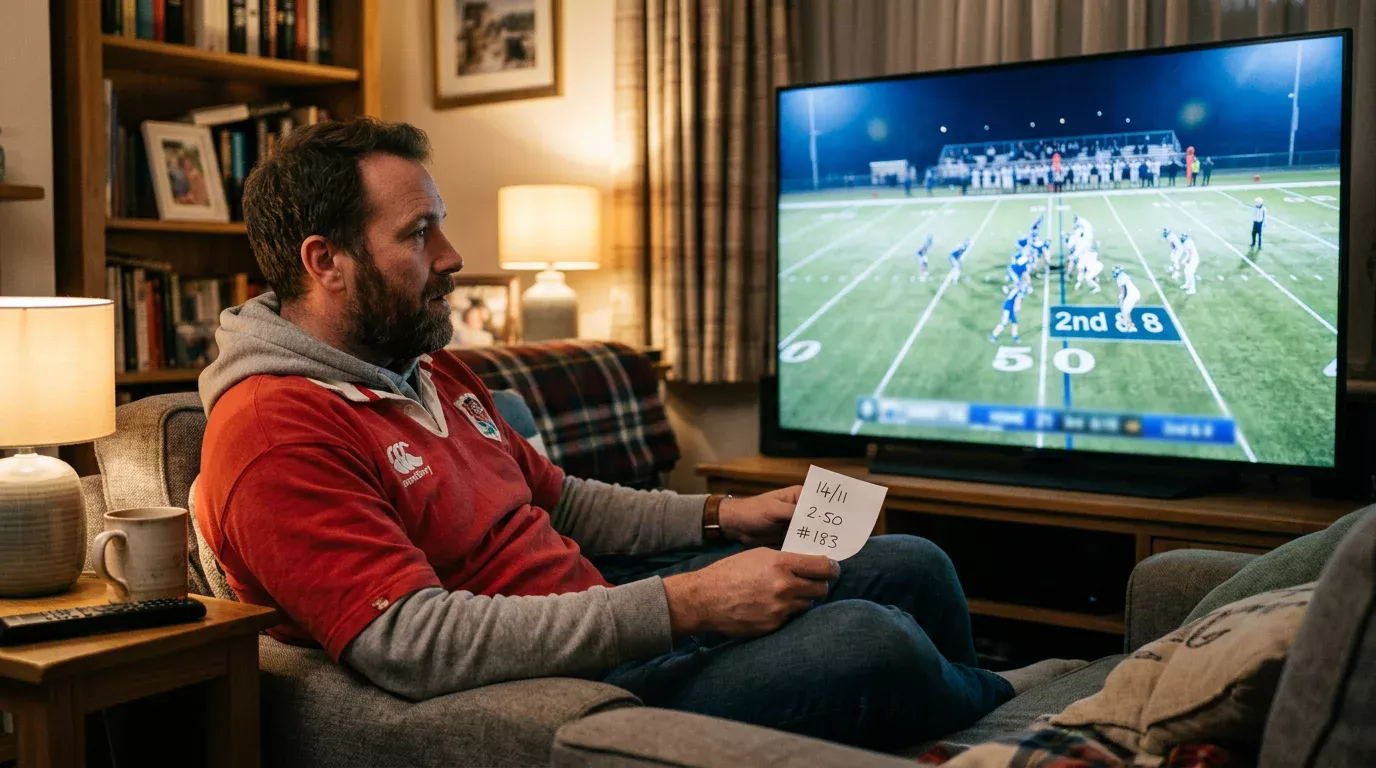
Side bet — the British conversational name for a proposition bet, any wager on an event within a match that does not depend on the final result or margin. Used interchangeably with “prop”, “special” and occasionally “novelty”.
Proposition wager — the formal term, more common in American coverage. A specific proposition is offered, you back yes or no, or over or under a line. Functionally identical to a side bet.
So why two names for one thing? Partly history, partly culture. Football betting in Britain never developed a hard wall between “the result” and “everything else”, because we’d been having a flutter on first goalscorer and correct score for generations before American football arrived on these shores in any serious way. When the NFL did arrive, the betting vocabulary that came with it was American, full of props and parlays and plus-money. British punters quietly mapped the new markets onto words they already used. A prop became a side bet because that’s what an “extra” wager has always been called down the bookies. The Paddy Power desk says exactly this, that we’re more likely to call props side bets or not differentiate them from match odds at all, and they’re right, it’s a linguistic accident more than a meaningful distinction.
The practical upshot for a UK punter is freeing. You don’t need to learn a new category of betting. You already understand the concept from football: a bet on the first goalscorer is a player side bet, a bet on both teams to score is a game side bet, a bet on total corners is a totals side bet. Swap the sport, keep the instinct. NFL side bets are the same idea translated into touchdowns, passing yards and field goals.
And this matters more every year, because the audience for it keeps growing. The NFL’s own research puts the UK fanbase north of 13 million, with roughly four million of those classed as avid, the sort who’ll set an alarm for a 1am kick-off. That’s not a niche anymore. It’s a proper, self-sustaining betting market, and side bets are the part of it that hooks people fastest, because they give you a personal stake in moments the scoreboard has long since stopped caring about. When the result’s settled with a quarter to play, your side bets keep the closing minutes worth watching, and that’s precisely why they’ve become the heartbeat of how Britain bets on the NFL.
Side bets versus the markets you already know
I lost my first ever NFL bet because I didn’t understand the difference between backing a team and backing a moment. I had the winner spot on, the Bills won comfortably, and I still lost, because I’d actually placed a side bet on a specific player scoring first and he never touched the end zone. That sting taught me the single most useful lesson in this whole sport: the three core question types are completely separate machines, and confusing them costs money.
There are three workhorse markets that run the NFL betting economy, and the side bet is a fourth thing layered on top. The moneyline is the simplest, you back a team to win, full stop. The handicap, which Americans call the point spread, levels the field by giving one side a head start or a deficit in points, so a strong favourite might need to win by seven or more to “cover”. The totals market, over or under, asks whether the combined points of both teams will land above or below a number the bookmaker sets. Each of those is about the macro shape of the game. The side bet zooms in.
The cleanest way to feel the difference is to line up the same fictional fixture across all four. Say it’s a hypothetical match between two evenly matched sides. The moneyline asks who wins. The handicap asks whether the favourite wins by more than, let’s say, three and a half points. The total asks whether both teams combine for more than 44 points. And the side bet asks whether your chosen quarterback throws for more than 250 yards, a question that could resolve either way no matter who wins, covers or busts the total.
| Question type | What you’re betting on | Depends on final score? | UK name |
|---|---|---|---|
| Moneyline | Which team wins outright | Yes, directly | Match odds / win |
| Point spread | Whether a team wins by enough to cover a margin | Yes, the margin | Handicap |
| Totals | Combined points above or below a line | Yes, the total | Over / under |
| Side bet | An event inside the game: who, how many, will it happen | No, it floats free | Side bet / prop / special |
That bottom row is the one worth tattooing on the back of your hand. The first three columns all answer some version of “how does the scoreboard end up”. The side bet does not care about the scoreboard. It cares about a single thread of the game, and that independence is exactly what makes it both more entertaining and, when you do your homework, often softer in pricing than the heavily traded main lines. The relationship between the point spread and the UK handicap is worth a closer look in its own right, because they’re genuinely one mechanism split across two vocabularies, but for now the headline is simply this: side bets are a separate layer, and you back them alongside the core markets, not instead of them.
The three families of side bet: player, game and team
On a single Super Bowl I once counted the markets a major book had posted and stopped writing them down somewhere past 300. The big game routinely carries more than 400 separate side bets, and once you’ve stared at a wall of them you realise they’re not 400 different ideas, they’re three ideas repeated with different nouns. Get those three families straight and the whole sprawling menu suddenly organises itself.
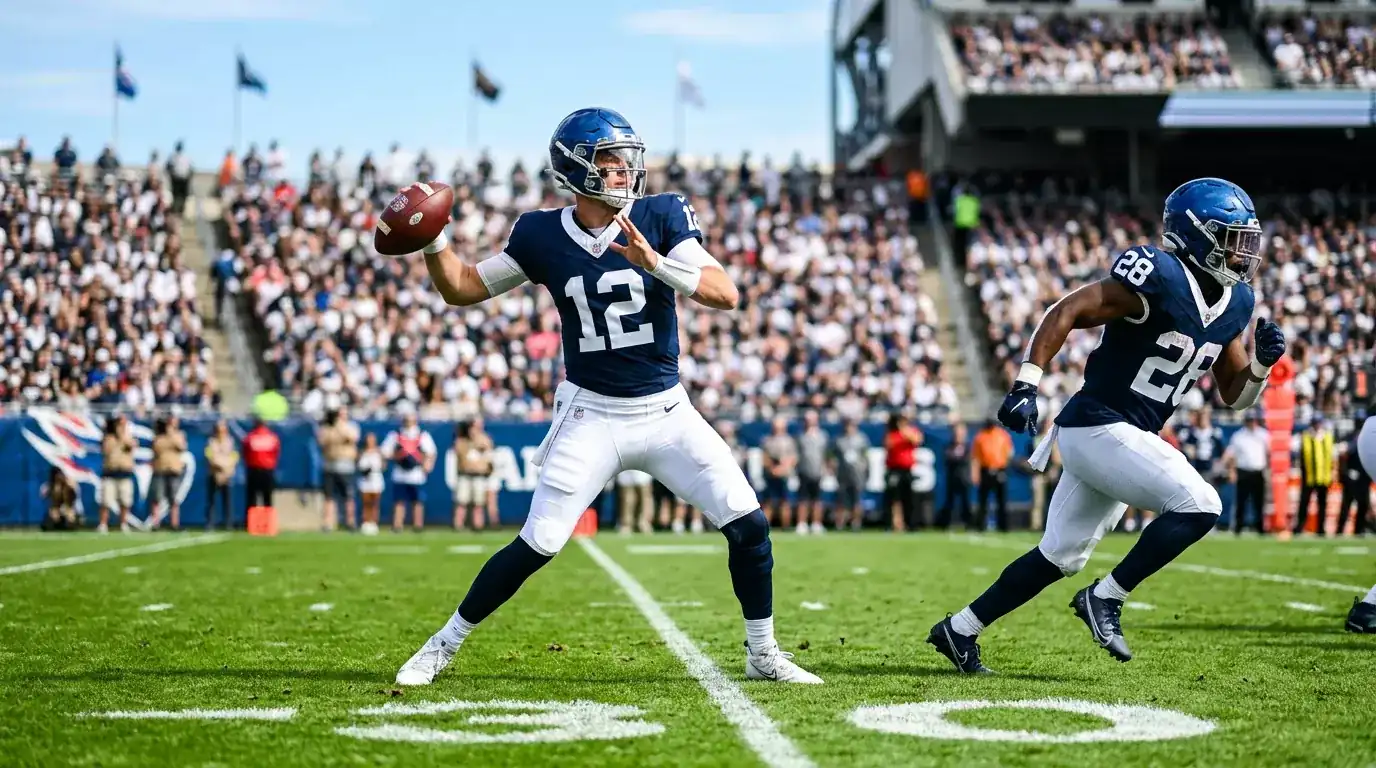
Player props are the first and biggest family. These are side bets on what one individual does, his passing yards, rushing yards, receptions, or whether he scores a touchdown. The line is almost always an over/under, a number the bookmaker sets that you bet above or below. Back a quarterback over 274.5 passing yards and you need 275 or more, simple as that. Player props are where the volume is, and within them, the touchdown-scorer markets are the undisputed kings. The DraftKings oddsmaker Johnny Avello reckons that over the last two or three years the props that write the most money are the touchdown scorers, and from where I sit trading the UK book, that’s true on this side of the water too. Britain loves backing a name to score.
Game props are the second family. These are side bets on something about the match as an event rather than a single player, the total number of touchdowns, whether there’ll be a score in the final two minutes of the first half, the winning margin landing in a particular band, or whether both teams find the end zone. They sit somewhere between a totals bet and a pure novelty, and they’re brilliant for people who want to read the flow of a game without obsessing over one athlete’s stat sheet.
Team props are the third. Here you’re betting on one team’s collective output, their total points, whether they score in every quarter, which side gets on the board first. They’re the quiet workhorses of the side-bet world, less glamorous than a touchdown scorer but often where I find the cleanest reads, because team-level outcomes are easier to model than the chaos of which specific receiver gets targeted.
| Family | What it’s about | Typical form | Example market |
|---|---|---|---|
| Player props | One individual’s performance | Over/under a stat, or yes/no on a touchdown | Receiver over 59.5 receiving yards |
| Game props | The match as a whole event | Over/under, banded ranges, yes/no | Total touchdowns over 5.5 |
| Team props | One team’s collective output | Over/under team total, yes/no | Team to score in every quarter |
A quick way to tell which family you’re looking at: read the subject of the bet. If it names a person, it’s a player prop. If it names a team, it’s a team prop. If it names neither and just describes a match-wide event, it’s a game prop. That one test will save you from the most common beginner error, backing a “first touchdown scorer” thinking it’s a team market when it’s firmly a player one.
The reason this taxonomy matters beyond tidiness is that each family behaves differently when it comes to pricing and risk. Player props swing hardest on injury news and game script, because one inactive starter can void or wreck a line. Game props are steadier but priced tighter. Team props sit in between. Knowing which family you’re in tells you what could blow up your bet before kick-off, which is half the battle.
Player props are deep enough to deserve a guide of their own, and if you want the proper breakdown of how passing, rushing and receiving lines are set and how to read them as a UK punter, I’ve written a full walkthrough of betting on individual player performances that picks up exactly where this overview leaves off. For now, hold onto the three families. Everything else on that 400-market Super Bowl menu is just a variation on one of them.
The side-bet markets UK punters actually back
If I pulled the bet slips of a hundred British NFL punters and laid them on a table, you’d see the same handful of markets again and again, and you’d see them dressed in fractional odds rather than the American prices the markets were born in. There’s a reason for that concentration. British bettors gravitate to the side bets that feel familiar from football, the ones about goalscorers, and in the NFL that means touchdowns above all else.
Anytime touchdown scorer is the runaway favourite, and it’s easy to see why. It’s the gridiron cousin of “anytime goalscorer”, a single name to back, a clean yes-or-no result, and a price that’s long enough to feel like a proper punt. Avello’s line about touchdown scorers writing the most money isn’t a US-only quirk; it describes the shape of the UK book just as accurately. First touchdown scorer is the higher-risk, higher-reward sibling, you need your player to score the very first touchdown of the entire match, which is why the prices balloon. Then come the player yardage lines, passing, rushing and receiving over/unders, which the slightly more studious punter loves because they reward actually watching the team.
Anytime touchdown scorer
Back a named player to score at any point. The most-backed NFL side bet in the UK by a distance.
First touchdown scorer
Higher risk: your player must score the game’s opening touchdown. Long prices, low strike rate.
Player passing yards
Over/under on a quarterback’s total passing yards. A read on volume and game script.
Player rushing yards
Over/under on a running back’s ground output. Swings hard on the game flowing one way.
Let me show you how a touchdown-scorer price actually reads, because this is where new punters freeze. Say a book offers an attacking player at odds to score anytime. In the American format you might see him at plus 150. A British book shows the same player at 6/4, or 2.50 in decimal. All three numbers describe an identical bet with an identical payout. A 10 pound stake at 6/4 returns 25 pounds, your 15 in winnings plus your 10 stake back.
Anytime touchdown scorer, one player, three formats
American: +150
Fractional (UK): 6/4
Decimal: 2.50
10 pound stake returns 25 pound total (15 profit + 10 stake).
The touchdown markets run far deeper than just anytime and first, into last scorer, two-or-more, and combination bets called scorecasts that pair a scorer with the match result. They’re worth a dedicated read, and I’ve laid out the whole family, from the safe anytime plays to the lottery-ticket first-scorer punts, in my guide to anytime and first touchdown scorer betting. The short version for this overview: if you’re new and want one market to learn properly, make it anytime touchdown scorer.
Reading the prices: American, fractional and decimal
The single biggest barrier I see between British punters and NFL side bets isn’t the sport, it’s the notation. You’ll be reading along happily, then a guide hits you with minus 110 and you’re lost, because nothing in your betting life has ever looked like that. Here’s the quick decode so it never trips you again.
There are three ways to write the same odds. American odds use a plus or minus and a number based around 100: minus 110 means stake 110 to win 100, plus 150 means stake 100 to win 150. Fractional odds, the British default, are written as a fraction: 10/11 means stake 11 to win 10, while 6/4 means stake 4 to win 6. Decimal odds, common across Europe and increasingly on UK apps, give you the total return per unit staked: 1.91 means a 1 pound stake returns 1.91 in total.
The same short-odds price in all three formats
American: -110
Fractional (UK): 10/11
Decimal: 1.91
A 10 pound stake returns roughly 19.10 total (9.10 profit + 10 stake).
That minus-110 figure is the one you’ll meet most, because it’s the standard price on most two-sided side bets, and it bakes in the bookmaker’s margin. Converting confidently between all three formats is a genuine skill that pays for itself, and the full method, including how to turn any American price into fractional and decimal in your head, lives in my dedicated breakdown of NFL odds across American, fractional and decimal formats. Master that and the entire American-written world of prop coverage suddenly opens up to you.
The Super Bowl: where side bets take over
There is exactly one day a year when side bets stop being the supporting act and become the entire show, and that’s Super Bowl Sunday. The numbers are genuinely staggering. Americans were projected to wager a record 1.76 billion dollars legally on Super Bowl LX, up around 27 percent on the year before, and here’s the part that should make every side-bet sceptic sit up: more than half of all the money staked on the game goes onto props, not onto the result. Read that again. The side bets out-handle the actual game.
Why does the big game flip the usual order? Because the Super Bowl is the one match a year that pulls in people who never bet, never watch the NFL, and have no idea who’s playing, but absolutely want a tenner riding on something. They can’t read a defensive matchup, but they can pick whether the coin lands heads, what colour the Gatorade will be, or how long the national anthem runs. The American Gaming Association’s chief executive Bill Miller frames it neatly, that no single event brings fans together like the Super Bowl and the record figures show how much Americans treat betting as part of the experience. The casual money pours in, and almost all of it lands on side bets.
1.76 billion dollars
Projected legal US handle on Super Bowl LX, up about 27 percent year on year.
Over half
The share of all Super Bowl money that lands on props rather than the result.
400+ markets
The number of side bets routinely offered on a single Super Bowl.
Plus 14 percent
The year-on-year jump in active online betting accounts over the Super Bowl weekend.
The Super Bowl menu splits into two moods. There are the serious game props, winning margin bands, total touchdowns, whether the game goes to overtime, the markets a studious punter can actually handicap. And then there are the novelties, the genuinely random stuff that exists purely for the party: the coin toss, the Gatorade shower colour, the length of the anthem. Both are side bets, but they reward completely different approaches, and a UK book will offer a curated slice of each depending on what the Gambling Commission allows.
FACT The coin toss is the purest 50/50 wager in sport. There is no edge to find, no team news to read, no injury to factor in. The only thing standing between you and a true coin flip is the bookmaker’s margin, which is exactly why it’s the perfect illustration of how a book makes money even on a totally random event.
The Super Bowl is a world unto itself, and I treat it as its own project every year, from the moment the markets open after the Conference Championships to the confetti falling. The full tour of game props, margins, coin toss, Gatorade and the rest, plus what’s actually available to a UK punter, is in my dedicated guide to Super Bowl prop bets from coin toss to confetti. If you only bet the NFL once a year, this is the day, and side bets are how you’ll spend it.
How big this all is, and why Britain caught the bug
When I started trading these markets, an NFL bet in a British shop was a curiosity, the sort of thing one bloke in the corner did while everyone else was on the football. That world is gone. The global market for betting on American football is climbing from around 8.52 billion dollars in 2025 toward 9.5 billion in 2026, growing at better than 11 percent a year, and Britain is no longer a footnote in that story, it’s one of the engines.
The viewing figures tell the tale before the betting figures do. The 2025 season was the most-watched run of International Games in NFL Network history, averaging 6.2 million viewers across television and digital for six matches, a 32 percent jump on the year before. That is not a sport limping along on novelty. That is a sport that has embedded itself into the British autumn, complete with the unholy 1am alarms for the late games and the half-day at the office after a London fixture.
8.52 to 9.5 billion dollars
The global American football betting market’s climb from 2025 into 2026, growing over 11 percent a year.
6.2 million viewers
The average UK audience for the 2025 International Games, up 32 percent year on year, a record.
1.2 million searches
The number of people searching for the NFL in the UK every month, around 13 percent of the relevant global volume.
Search behaviour confirms it. Roughly 1.2 million people in the UK look up the NFL every month, which works out to around 13 percent of the relevant global search volume, an enormous slice for a country that doesn’t field a team. People aren’t just watching, they’re researching, learning the rosters, picking favourites. The most-searched team in the UK as of October 2025 was the Kansas City Chiefs, pulling close to a tenth of all team-related searches, which tells you exactly which jersey you’ll see most on a London concourse.
Why does the market context matter to you, sitting there deciding whether to back a receiver over 50 yards? Because a deep, liquid, growing market is a healthier place to bet. More punters means more markets, more competition between books on price, and more side bets posted earlier in the week. The maturing of the UK NFL audience is the reason you can now find anytime touchdown scorer odds on a random Thursday in October, where a decade ago you’d have struggled to find the spread. Growth in the audience is, quite directly, growth in your options at the betting window.
It also means the responsible-gambling conversation has caught up. A market this size doesn’t operate in the shadows, it operates under a regulator, and that regulator shapes everything from which novelty markets you can back to what tools you have to keep yourself in check. Which is exactly where we go next.
Legal, licensed and keeping it in check
The question I’m asked more than any other, usually nervously, is whether betting on the NFL is even legal in Britain. It is, completely, and it’s been legal and properly regulated for a long time. What matters is not whether you can bet, but where. Your bet has to be placed with an operator licensed by the UK Gambling Commission, and that single requirement is the line between a protected punt and a problem.
The scale of the regulated market should reassure you about its legitimacy. Remote, meaning online, betting in Britain generated around 2.6 billion pounds in gross gambling yield across the financial year running April 2024 to March 2025, with football and horse racing the biggest contributors and American football a fast-growing slice within it. This is a vast, monitored, taxed industry. Backing a touchdown scorer on a UKGC-licensed app is no more legally fraught than buying a lottery ticket.
Regulation exists for a reason, and the man who runs the NCAA, Charlie Baker, puts the integrity case bluntly, that operators and regulators offering certain bets put athletes and competition integrity at risk and that everyone in the chain can and should do more. He’s talking about the harder edges of the prop world, the player-level markets that have drawn genuine controversy in American college sport. The UK framework takes that seriously, which is why some novelty and player markets you’ll see referenced in US coverage simply aren’t offered here.
The non-negotiables, every single time. You must be 18 or over to place any bet in the UK, no exceptions. Your operator must hold a current UK Gambling Commission licence. And GambleAware exists, free and independent, for anyone who wants to talk through their gambling. None of this is small print I’m tucking away at the bottom. It’s the foundation the rest of this guide stands on.
Now, perspective on the risk, because scaremongering helps nobody. Gambling is genuinely mainstream in Britain, with 48 percent of adults having taken part in some gambling activity in a recent four-week window, and betting specifically being the most popular activity after lotteries. The overwhelming majority do it without harm. Only around 0.5 percent of players in the UK fall into the high-risk category for problem gambling. That figure is small, but it is not zero, and the entire point of betting with a licensed operator is that the tools to keep yourself in the safe majority are built right into the product.

Before you stake a penny, run this check
- Confirm the operator displays a current UK Gambling Commission licence, usually footer-linked to the public register.
- Confirm you are 18 or over and betting only with money you can comfortably lose.
- Set a deposit limit before you start, not after a losing run.
- Know that GambleAware and free self-exclusion tools exist, and that using them is a sign of control, not weakness.
- Treat the stake as the price of entertainment, never as an investment or a way to make money back.
I keep the responsible-gambling thread running through everything I write, not as a legal tic but because I’ve watched it matter. Side bets are designed to be moreish, that’s their whole appeal, a way to keep a dead game alive. The flip side is they’re easy to over-bet precisely because each one feels small. Bet legal, bet licensed, bet within a limit you set in advance, and the NFL stays the joy it should be. The legal framework and the licensing details run deeper than I can cover in an overview, and the practical tools deserve their own treatment, both of which I keep separate from the betting guides so the focus stays clear.
Placing your first side bet, start to finish
My first ever side bet took me about twenty minutes to place, because I kept second-guessing every screen, convinced I’d misread something and was about to stake my mortgage on the wrong player. It takes about forty seconds once you’ve done it once. Let me walk you through the shape of it so your first time is the forty-second version, not the twenty-minute one.
NFL Side Bet Payout Calculator
Every side bet reads three ways – American, fractional, decimal – and they’re all the same price. Enter your picks in whichever format you’re looking at, add a stake, and see your return on each single and on the whole multiple.
How this works: every price is the same bet in three accents. Fractional a/b becomes decimal (a ÷ b) + 1; American +150 is (150 ÷ 100) + 1 = 2.50, and −110 is (100 ÷ 110) + 1 = 1.91. A single’s return is stake × decimal odds – your stake back plus the profit – so £10 at 6/4 (2.50) returns £25. Backing several side bets as singles means each stands alone: you stake on each and collect on the ones that win. Rolling them into a multiple (an acca) multiplies the decimal odds together and puts a single stake through the lot – every leg has to win, so the return balloons but the chance of collecting shrinks fast. Two even-money legs is 3.80 combined, four is over 13.0, which is why a builder feels tempting and pays the book so well. The multiple also stacks the margin at every leg, so treat it as the long-odds fun option, not the value play. Prices for a beaten or void selection (a player ruled inactive) are usually settled at 1.00 and drop out of the multiple – check each book’s settlement rules. This is a payout tool, not a tip; it shows what a price returns, not whether it’s worth backing. Not financial advice. 18+ – GamStop and BeGambleAware are protection routes; National Gambling Helpline 0808 8020 133.
The process is the same at any licensed UK book. You pick a match, you open the side-bet markets for it, usually grouped under headings like “player props”, “touchdowns” or “specials”. You choose your market and your selection, the odds drop into your bet slip, you type a stake, and you confirm. The potential return calculates itself before you commit, so you always see exactly what you stand to win. That’s the whole mechanic.
A worked example: anytime touchdown scorer
Step 1: Pick the match and open its touchdown markets.
Step 2: Select a player offered at 6/4 to score anytime.
Step 3: The selection lands in your slip at 6/4 (decimal 2.50).
Step 4: Enter a 10 pound stake. The slip shows a return of 25 pounds.
Step 5: Confirm. If your player scores at any point, you collect 25; if not, you lose the 10 stake.
That’s a single bet, the cleanest way to start. As you get comfortable you’ll discover ways to combine side bets, multiples that stack several selections, and same-game builders that let you pair props from one match, but I’d strongly resist those on day one. Combinations multiply both the potential return and the bookmaker’s edge, and they’re a far better friend once you understand pricing.
Do
- Start with one clear single bet you fully understand.
- Read the settlement rules for the market before staking.
- Check the price across more than one book if you can.
- Set your stake before you open the slip, not after.
Avoid
- Chasing long-odds first-scorer punts as your opening bet.
- Stacking five legs into a builder before you grasp how the odds combine.
- Betting a market you can’t explain back to yourself in one sentence.
- Increasing your stake to recover a previous loss.
The thirty-second pre-confirm check
- Right match, right player, right market?
- Stake within the limit you set in advance?
- Return shown matches what you expected from the odds?
- You understand exactly what has to happen for this to win?
Placing the bet is the easy part. Doing it with an actual edge, finding side bets where the price is softer than the true probability, is a craft that takes seasons to sharpen, and it’s where the difference between a punter who breaks even and one who slowly bleeds really lives. That’s a deep topic in its own right, and I’ve put everything I know about line shopping, value and bankroll discipline into my full guide to finding value in the side-bet markets. Place your first single first, though. Walk before you run.
Questions UK punters ask me about side bets
What is a side bet in NFL betting, and why do UK punters call props that?
A side bet is any wager on something inside a match that doesn’t depend on the final result, who scores, how many yards a player gains, what colour the Gatorade is. Americans call these proposition bets, or props. British punters call them side bets because that’s the word we’ve always used for an “extra” wager beyond the match odds, a habit carried over from decades of football betting. The two terms describe the exact same markets; only the vocabulary differs.
What are the main types of NFL prop bets?
Three families cover almost everything. Player props are about one individual’s performance, his yards, receptions or whether he scores. Game props are about the match as a whole, total touchdowns, winning margin, whether the game goes to overtime. Team props are about one team’s collective output, their total points or whether they score in every quarter. A simple test sorts them: if the bet names a person it’s a player prop, if it names a team it’s a team prop, and if it names neither it’s a game prop.
What’s the difference between a side bet and the moneyline or handicap?
The moneyline asks who wins. The handicap, which Americans call the point spread, asks whether a team wins by enough to cover a margin. Both of those resolve on the final score. A side bet resolves on something else entirely, an event within the game that floats free of the result. You can win your side bet while losing the moneyline, or lose your side bet while the team you backed wins comfortably. They’re independent layers on the same match, which is why you back them alongside the core markets rather than instead of them.
Are NFL side bets worth it for beginners?
For learning the sport and keeping a game alive, yes, they’re excellent, because a single named-player bet is intuitive and turns even a blowout into something to watch. The honest caveat is that side bets generally carry a heavier margin than the main lines, so they’re better treated as paid entertainment than as a route to profit when you’re starting out. Begin with one clear single bet you fully understand, on a small stake, and let the early bets teach you rather than enrich you.
When do Super Bowl side bets become available?
The core Super Bowl markets open as soon as the two finalists are confirmed at the Conference Championships, roughly two weeks before the game. The serious game props and player props arrive first, with the wider novelty markets, coin toss, Gatorade, anthem length, dropping in the days closer to kick-off as books finalise their menus. By Super Bowl week you’ll typically have several hundred side bets to choose from across UK books.
What happens to my side bet if the player doesn’t play?
If your player is ruled inactive and takes no part in the match, most books void the bet and return your stake, since the selection never had a chance to land. The exact rule depends on the market and the operator, so it’s always worth reading the settlement terms before you stake. The general principle is fair: if the event you backed couldn’t physically happen because your player never appeared, you get your money back rather than losing it.
Is NFL side betting legal in the UK?
Yes, entirely, provided you bet with an operator licensed by the UK Gambling Commission and you’re 18 or over. The regulated UK market is huge and closely monitored, and only around 0.5 percent of players fall into the high-risk category for problem gambling, in part because licensed operators are required to offer tools to help you stay in control. Stick to a UKGC-licensed book, set a limit in advance, and you’re betting within a properly protected framework.
Where the smart money goes from here
You came here for one word and you’re leaving with a whole map. Side bet, prop, special, they’re all the same thing, and you now know the territory better than most punters who’ve been at it for years.
Let me leave you with the throughline that ties everything above together. NFL side bets are not a mysterious American invention you need to decode from scratch. They’re the gridiron version of the goalscorer and corner bets you already half-understand from football, priced in odds you can read once you know that minus 110, 10/11 and 1.91 are the same number in three accents. The three families, player, game and team, organise the entire sprawling menu. The Super Bowl is the one day they become the main event, with more than half the money on the game landing on props. And every penny of it belongs on a UK Gambling Commission licensed book, placed within a limit you set before kick-off, by someone who’s 18 or over.
What I’d actually do, if you’re starting today, is small and simple. Pick one match from the current season, find the anytime touchdown scorer market, back one name you have a genuine read on for a stake you won’t notice losing, and watch how it changes your relationship to the fourth quarter. That single bet teaches you more than any guide can. Then, when you want to go deeper, the rest of this site is built to take you there one market at a time, the touchdown family, the player props, the Super Bowl specials, the odds maths and the value strategy, each waiting for the day you’re ready for it. The NFL isn’t going anywhere in Britain. Neither are the side bets. Bet them well, bet them responsibly, and they’ll keep every game worth watching.
Created by the ”nfl Side Bets” editorial team.