NFL Touchdown Scorer Betting: Anytime, First and Beyond
 Available in US
Table of Contents
- Anytime touchdown scorer, the workhorse market
- First touchdown scorer and the timing premium
- Last scorer, two or more, and the multi-touchdown markets
- How to pick a touchdown scorer that actually scores
- Reading touchdown odds in the UK format
- Scorecast, combinations and stacking touchdown markets
- Where touchdown betting fits in a sensible season
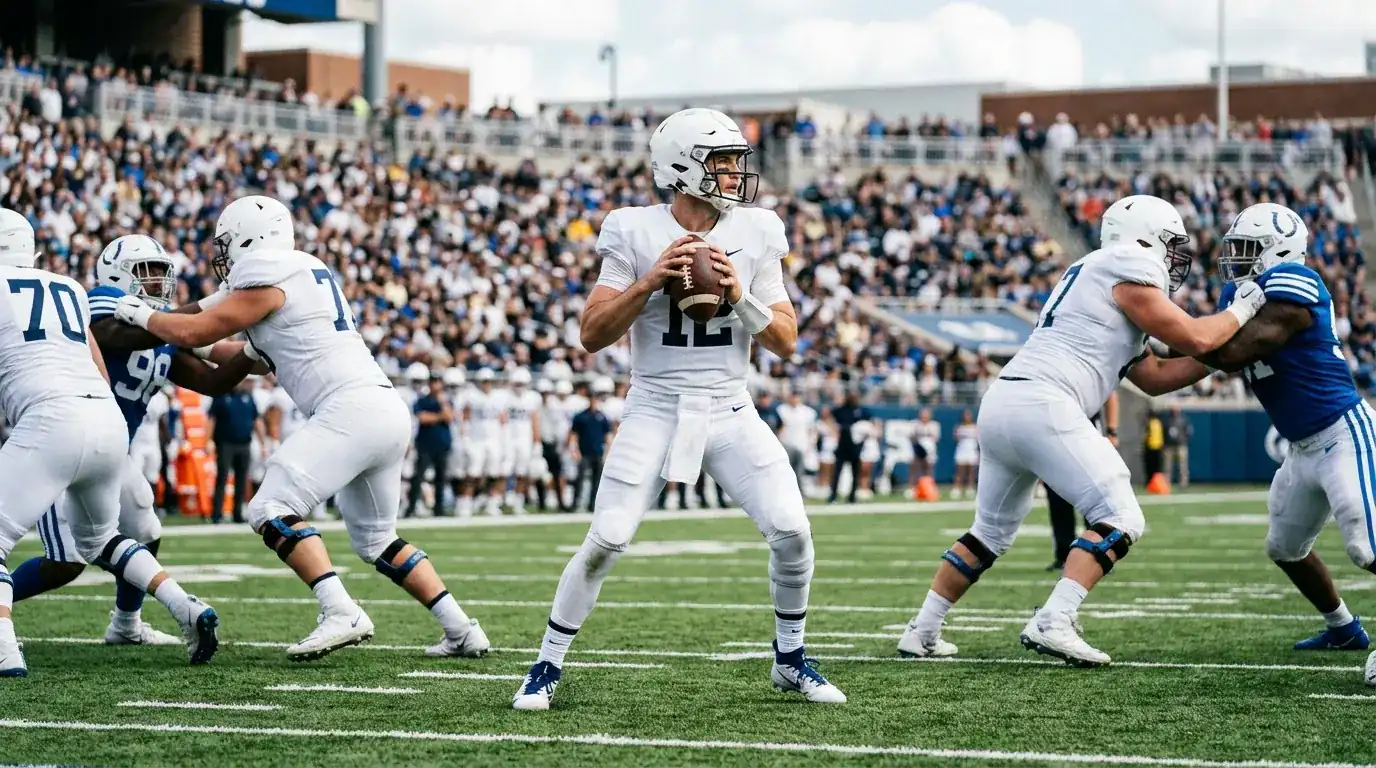
Touchdown scorer betting is the busiest corner of the NFL side-bet board, and it is busy for a reason. You are not betting on the scoreline or a yardage total here — you are betting on who finds the end zone and, in some markets, when. Touchdown-scorer props pull in more money than any other proposition market for the major sportsbooks over the last two or three seasons, which tells you exactly where the recreational crowd’s attention sits. The thing that makes these markets tick differently from ordinary player props is that most of them are binary. There is no over or under to clear, just a yes or a no — does this player score, or does he not — and that single structural quirk changes how the price is built and how you should hunt for value. Get your head around the yes/no nature of it and the whole touchdown board opens up.
See also: nfl side bets for NFL scoring markets.
Anytime touchdown scorer, the workhorse market
The first proper bet I ever felt smart about was an anytime touchdown scorer on a backup running back who had quietly inherited the goal-line carries after an injury. He was 5/2 because the market was still pricing him as a committee back, and he barrelled in from the two-yard line in the second quarter. That ticket taught me what anytime touchdown betting actually rewards: not the famous name, but the player most likely to get the ball where touchdowns are scored.
Anytime touchdown scorer, often shortened to ATD, is the market where you back a player to score at any point in the game. It is the most popular touchdown bet by a distance, and Johnny Avello, who heads up the sportsbook operation at DraftKings, has said the props that write the most money over the last two or three years are the touchdown scorers. That popularity is double-edged. Heavy attention means tight, well-policed prices on the obvious names, but it also means the market is deep enough that the less obvious scorers — the goal-line specialists, the red-zone tight ends — sometimes slip through at a generous number.
What you are really pricing in an ATD market is opportunity, not talent. A player scores a touchdown by being on the field when his team reaches the end zone and being the one who carries or catches the ball over the line. So the questions I ask are mechanical. Does this player get goal-line carries? Is he the red-zone target his quarterback looks for inside the twenty? Does his team score enough touchdowns for any of this to matter? A brilliant deep threat who never sees a goal-line snap can be a worse anytime bet than a plodding short-yardage back nobody outside the fanbase has heard of.
The mistake I see most often is backing the best player on the field rather than the most likely scorer. Star receivers rack up yards between the twenties and then watch a fullback punch in the touchdown from a yard out. The anytime market does not care how the player got his yardage; it cares only whether he reached the end zone. Discipline here means following the goal-line usage, not the highlight reel, and that is a habit worth drilling until it becomes automatic.
First touchdown scorer and the timing premium
Here is a number that reshaped how I bet the first touchdown market: roughly forty per cent of opening Super Bowl touchdowns have come through the air rather than on the ground. I had spent years assuming the first score was a goal-line running play because that is what the slow, grinding opening drives looked like in my memory. The data said otherwise, and once I started weighting passing plays properly, my first-touchdown reads got sharper.
First touchdown scorer, or first TD, asks you to name the single player who scores the very first touchdown of the game. It is a harder bet than anytime — there is exactly one winner across both rosters — so the odds are longer and the variance is brutal. You can have a perfect read on which team scores first and still lose because a different player on that team finished the drive. This is a market that punishes overconfidence and rewards a wide, cheap spread of small stakes more than a single conviction play.
The timing element is what separates this from anytime betting. You are not just forecasting who scores; you are forecasting who scores before anyone else does. That puts a premium on players who feature on opening scripted drives — the receivers a coach designs early plays around, the backs who get the first goal-line look. Teams script their opening possessions in advance, and the players who feature in those scripts are disproportionately likely to find the end zone first. If you can identify a team that opens fast and a player central to their early-down design, you have the makings of a first-touchdown angle the casual punter overlooks.
Value in first touchdown markets behaves strangely. The favourites are short because everyone can see the obvious scorers, and the longshots are long because the field is enormous. The sweet spot, in my experience, sits with the mid-priced players — the secondary receiver or the change-of-pace back who is more involved than the price suggests but not so obvious that the market has hammered the odds down. Backing a fistful of these at decent prices rather than one short favourite spreads your risk across the variance this market throws at you.
Last scorer, two or more, and the multi-touchdown markets
Most punters never look past anytime and first, and that is fine — but the wider touchdown board has markets that reward a specific kind of read, and ignoring them entirely leaves angles on the table. Last touchdown scorer, two-or-more touchdowns, and the various scorer combinations each tilt the maths in a different direction, and knowing when to reach for them is a useful skill.
Last touchdown scorer is the mirror image of first, and it carries a quiet edge that few punters exploit. The final touchdown of a game is disproportionately likely to come from the trailing team’s passing attack in garbage time, or from the leading team running out the clock and stumbling into the end zone. That structural lean means the player profile for a last-touchdown bet differs from a first-touchdown bet on the same roster. I think of it as betting on the game script of the fourth quarter rather than the first, and it pays to picture how the closing minutes are likely to unfold.
Two-or-more touchdowns is where the odds get juicy and the variance gets violent. Asking a single player to score twice in one game is asking a lot — most players who score do so once — so these markets pay out at long prices. They are best reserved for the genuine goal-line monopolists, the backs who own every carry inside the five, or for the rare matchup where one team is expected to run up a lopsided scoreline. Bet them small and treat the payout as a lottery rather than an expectation.
Then there are the exotic combinations, the eight-point markets and the scorer-and-result tickets that stitch a touchdown to another outcome. One of the most curious is the octopus, where a single player both scores a touchdown and converts the two-point try that follows for eight points on one possession. It is rare, it is specific, and the rules around what counts trip people up constantly. If that particular market intrigues you, our breakdown of the eight-point side bet and why a passing touchdown does not count walks through exactly when it triggers and how rare it really is.
The wider lesson across all these secondary markets is that they exist to give the trading desk more ways to take action, not to hand the punter free money. A bookmaker who can list anytime, first, last, two-or-more and a stack of combinations on every player has multiplied the surface area of the board, and each new market carries its own slice of margin. I have found that the only one of these I return to with any conviction is last touchdown scorer, precisely because the fourth-quarter game script is more readable than most punters assume and the field thins out as the obvious early-game names recede from relevance. The rest I treat as occasional flutters rather than staples.
How to pick a touchdown scorer that actually scores
The English audience for this stuff has exploded, and the betting depth has followed. The 2025 International Games season was the most-watched in the history of those fixtures on the league’s own network, averaging 6.2 million viewers across television and digital for six games, up roughly a third year on year. More eyes means more action, more action means deeper markets, and deeper markets mean more touchdown options than a UK punter could have dreamed of a few seasons ago. With all that choice, a method for narrowing the field matters more than ever.
My process is unglamorous and it works. I start with the game total, because a high-scoring game produces more touchdowns and therefore more winning scorer tickets across the board. I then look at the spread to gauge game script — favourites run near the goal line, underdogs throw — which tells me whether to lean towards a back or a receiver. From there I drill into red-zone usage, the single most predictive factor, asking who actually gets the ball inside the twenty rather than who racks up yards between the forties.
The next layer is matchup. A goal-line back facing a defence that bleeds short-yardage touchdowns is a far better bet than the same back against a brick-wall front, even at identical odds. Defences have personalities, and the ones that struggle to keep runners out of the end zone or that surrender touchdowns to tight ends are gifts to the touchdown bettor who does the homework. I keep a rough mental ledger of which defences are soft where, and I revisit it as the season’s sample grows.
The final filter is price discipline. A great touchdown read at a terrible price is a bad bet, and the popular markets are popular precisely because the crowd has already bid the obvious names down to skinny odds. The money sits where the bookmaker pays the closest attention, which means the obvious scorers are efficiently priced and the value hides among the players the crowd overlooks. I would rather have a slightly worse read at a generous price than a perfect read at odds that have been crushed by recreational money.
Reading touchdown odds in the UK format
A touchdown price tells a story if you know how to read it, and the format matters as much as the number. UK bookmakers will show you a favourite to score at something like 4/6 fractional, which is a short price reflecting a high probability, while a longshot might sit at 12/1 or longer. The American sites that drive a lot of the underlying pricing quote the same markets in plus-money terms, so a +150 anytime scorer becomes 6/4 fractional or 2.50 decimal once you translate it.
The practical skill is converting on the fly so you never misjudge value. A 2/1 anytime touchdown scorer implies the bookmaker thinks that player scores roughly a third of the time before margin, because the implied probability of 2/1 is one in three. If your own read says the player scores closer to forty per cent of the time, that gap is your edge. Doing this arithmetic quickly, in whatever format your bookmaker shows, is the single most useful habit in touchdown betting, and it stops you backing a name at a price that has no business being on your ticket.
Decimal odds make this maths cleanest, which is why I default to them when I am actually calculating. An anytime scorer at 2.50 decimal returns two and a half times your stake including the stake, so a winning ten-pound bet hands back twenty-five pounds. Fractional odds describe the profit only — 6/4 means six pounds profit on every four staked — so you have to add your stake back mentally to reach the same figure. Neither is better; they are dialects of the same language, and fluency in both is non-negotiable for a UK touchdown bettor.
Scorecast, combinations and stacking touchdown markets
Once a Super Bowl board can carry well over four hundred separate proposition markets, you start to see touchdown bets bundled with other outcomes in ways that look tempting and price up in the bookmaker’s favour. Scorecast and the various touchdown combinations are where the recreational punter reaches for a big payout, and they deserve a clear-eyed look before you click.
A scorecast is the British name for a bet that pairs the first touchdown scorer with the correct final score of the game. It is two long-odds events welded together, which is why the payouts can look life-changing on a small stake. They are also brutally hard to land, because you have to be right about both an individual scorer and an exact scoreline, two outcomes with enormous variance. I treat scorecasts as entertainment money, a flutter on a marquee game, never as a serious part of a betting strategy.
The more useful combination habit is stacking correlated touchdown markets thoughtfully. A goal-line back to score anytime, combined with his team to win, is a pair of outcomes that move together — if the team controls the game, the back is more likely to punch one in. Bookmakers know this and price the combination to recover the correlation, so it rarely pays what an independent calculation suggests. The discipline is to understand that correlation works against your payout, not for it, whenever the legs reinforce each other.
The number of touchdown-flavoured combinations on a big game is a feature of scale, not a sign of value. More markets means more ways to lose as well as more ways to win, and the bookmaker’s margin is baked into every one. My rule is simple: combine touchdown markets only when I have a genuine, independent read on each leg, and never simply because the bundled price looks generous. The generous price is generous for a reason, and that reason is rarely in your favour.
There is a softer version of stacking that I do allow myself, and it is worth mentioning because it sits closer to sensible than the scorecast lottery. Pairing an anytime touchdown scorer with a modest receiving or rushing yardage line on the same player is a coherent bet — you are expressing one view, that this player has a big day, through two correlated markets. The combined price will still reflect the correlation, but at least the legs are telling the same story rather than fighting each other. Compare that to a punter who backs a quarterback’s passing under alongside a touchdown over for the same offence, two outcomes pulling in opposite directions, and you can see why a coherent stack beats a contradictory one every time.
Where touchdown betting fits in a sensible season
Touchdown markets are the most fun the NFL side-bet board has to offer, and that is exactly why they demand a clear head. The anytime market rewards following goal-line usage over star power, the first-touchdown market rewards spreading small stakes across the variance, and the exotic combinations reward restraint above all. Underneath every one of them sits the same chain of logic — game total, spread, game script, red-zone opportunity — and the punter who works that chain beats the punter who backs a name on a whim more often than not.
What touchdown betting will never be is a reliable income, and pretending otherwise is the fastest route to trouble. These are entertainment markets carrying a healthy bookmaker margin, best enjoyed in stakes you have decided on in advance, at an operator licensed by the Gambling Commission, with the sweat of a red-zone snap as the point rather than the profit. Keep it that way and the touchdown board becomes the most absorbing way to watch a game of football. Lose that frame and it becomes something else entirely, which is a price no winning ticket is worth paying.
Focus your picks with NFL first touchdown scorer betting.
What is the difference between anytime and first touchdown scorer odds?
Anytime touchdown scorer pays if your player scores at any point in the game, so the odds are shorter because there are many chances for it to land. First touchdown scorer pays only if your player scores the very first touchdown of the match, so there is exactly one winner across both teams and the odds are far longer. First TD carries much higher variance, which is why spreading small stakes across several mid-priced players tends to work better than backing one short favourite.
Does an anytime TD scorer bet count if the player scores a two-point conversion only?
No. An anytime touchdown scorer bet settles on the player crossing the goal line for a touchdown, which is worth six points. A two-point conversion is a separate scoring play that follows a touchdown and does not count as a touchdown for settlement purposes. If your player only converts a two-point try and never scores an actual touchdown, the anytime bet loses. Always read your bookmaker’s settlement rules, as the treatment of unusual scoring plays can vary.
Are favourites or longshots better value for first touchdown scorer?
Neither extreme tends to offer the best value. The obvious favourites are bid down to skinny prices by recreational money, and the longshots are long because the field of possible scorers is enormous. The sweet spot usually sits with mid-priced players who feature on scripted opening drives but are not obvious enough for the crowd to have hammered the odds. Backing several of these at fair prices spreads your risk across the heavy variance this market throws at you.
Written by the editors at nfl Side Bets.