Coin Toss Bet at the Super Bowl: The Purest 50/50 Side Bet
 Available in US
Every February I get the same message from someone in my group chat: “What’s your edge on the coin toss?” And every year I give the same answer, which is that there is no edge, there has never been an edge, and the moment you understand why is the moment you understand the bookmaker’s entire business. The coin toss is the only NFL bet where skill is provably worthless, and that’s exactly what makes it the most honest teacher on the whole board.
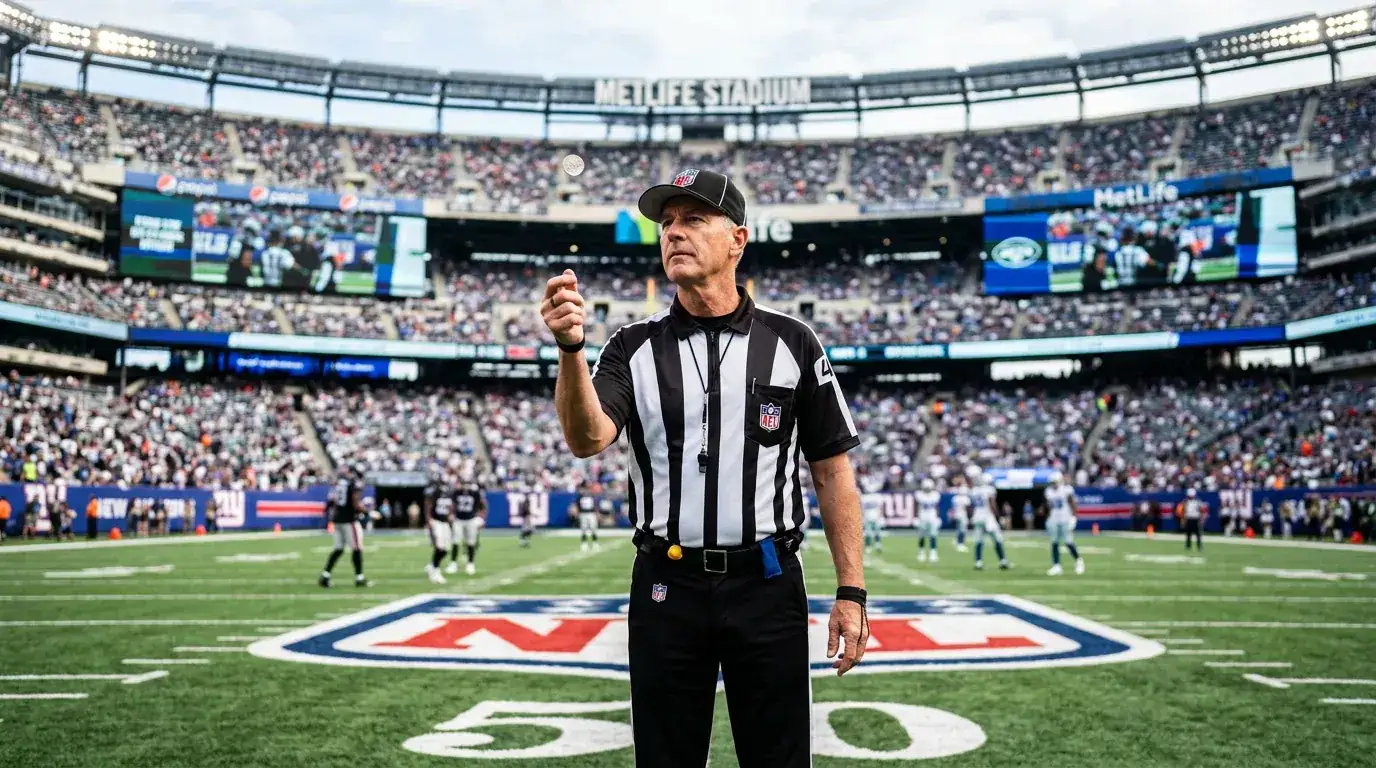
A coin toss bet is a wager on the result of the ceremonial flip before kick-off, heads or tails, and it’s the purest 50/50 proposition in sport. The outcome is genuinely random, nobody can predict it, and so the entire economics of the bet come down to one thing, the bookmaker’s margin. As Bill Miller, who heads the American Gaming Association, has said of the event, no single occasion brings fans together like the Super Bowl, and the coin toss is the daft, beloved little ritual that captures that mood, half a million people betting on a literal coin flip purely for the fun of being in on it.
See also: nfl side bets for Super Bowl novelty props.
How the coin toss market works
The first time I really looked at coin toss odds, I expected them to be exactly even, because the event is exactly even. They weren’t, and that small discrepancy is the whole lesson hiding in plain sight on this market.
The flip itself is a fair, two-outcome event. Heads and tails each have a genuine 50 percent chance, and no team news, weather report, or statistical model can shift that by a fraction. This is the only market on the entire NFL board where that’s true, where the underlying probability is fixed, known, and immune to analysis. Every other bet involves estimating an uncertain probability. The coin toss hands you the probability for free, which means there’s nothing to handicap and nothing to research.
So why does anyone bet it? Because it’s a ritual, and the Super Bowl turns rituals into markets. The flip is the first moment of the broadcast, a shared bit of theatre, and betting on it is a way of buying into the spectacle rather than seeking profit. The popularity is staggering given there’s zero skill involved, and that popularity exists precisely because more than half of all the money wagered on the Super Bowl goes onto props rather than the result. The coin toss is the most extreme prop of all, a bet with no game attached, and its very pointlessness is the point. People bet it to feel involved from the very first second, not because they think they can win.
The vig on a 50/50 bet
Here’s where the coin toss earns its place as the best teaching tool in betting, because it isolates the one concept that quietly drains every punter’s bankroll: the vig. On a true 50/50 event, the vig is laid bare with nowhere to hide, and once you see it here you’ll see it everywhere.
The vig, also called the juice, is the bookmaker’s margin, the cut they take for offering the bet. On a fair coin, a truly fair bet would pay you even money, double your stake for a win, because your chance is exactly half. But you’ll never be offered true even money on both sides. Instead, both heads and tails are priced slightly below fair, so that whichever way the coin lands, the bookmaker keeps a sliver. That sliver is the vig, and on the coin toss it’s the only thing standing between you and a genuine break-even bet over time. There’s no skill to overcome it with, no information to exploit, just a mathematically guaranteed long-run loss equal to the margin.
This makes the coin toss the perfect illustration of how the house edge works on every market, not just this one. In the US the bookmaker hold rate climbed to 10.2 percent in 2025, a figure that captures exactly this dynamic across all bets, the structural margin baked into the prices regardless of outcome. On a skill market, a sharp bettor can fight that margin with better information. On the coin toss, you can’t, which strips the concept down to its essence. Whatever you stake, the long-run expectation is a loss precisely the size of the vig, and no amount of cleverness changes it. Internalise that on the coin toss and you’ll understand why beating the bookmaker on any market requires finding probability they’ve priced wrong, the very mispricing that doesn’t exist on a fair coin. If you want to see how that same margin shapes the genuinely skill-based novelty markets, the next stop is the guide to how the Gatorade colour and other novelty markets work.
Why strategy is powerless here
I’ll say it plainly because so many people refuse to accept it: there is no system, no pattern, and no angle that beats the coin toss, and anyone selling you one is selling you nonsense. The history of past flips tells you nothing about the next one, because a fair coin has no memory.
This is the gambler’s fallacy in its cleanest form. The fact that tails has come up several Super Bowls running does not make heads “due”, because each flip is independent and the coin doesn’t know or care what happened before. People stare at the historical record looking for a trend, and there’s simply nothing there to find, just random noise that occasionally clusters the way randomness always does. Betting on a streak to continue or reverse is identical, both are guesses with a 50 percent chance, both pay below fair, both lose to the vig over time.
And that’s genuinely liberating once you accept it. The coin toss is the one bet where you can stop thinking entirely, place it purely for the fun of the moment, and feel no guilt about not having done your homework, because there was no homework to do. It’s a flutter in the truest sense, a small stake on pure chance for the joy of being part of the broadcast’s opening seconds. Just go in knowing it’s exactly that, a ritual with a margin, and never a place where effort or insight earns you anything.
The honest little flip that explains the whole board
The coin toss is a bet that teaches more than it pays. It hands you a perfect 50/50, removes every variable except the bookmaker’s margin, and in doing so shows you the engine that powers all gambling, the vig you can only beat by finding mispriced probability, which here doesn’t exist.
Explore more fun bets in our Super Bowl novelty props and Gatorade guide.
Bet it if you enjoy it, and plenty of people do, but bet it for what it is, a moment of shared fun at the start of the biggest game of the year, not a contest you can win with skill. Carry the lesson into the rest of your betting, that the only path to a long-run edge is exploiting probability the bookmaker has got wrong, and you’ll have learned the most valuable thing the Super Bowl has to teach, taught by its silliest market.
No. Because the flip is a genuine 50/50 event, a fair bet would pay even money, but bookmakers price both heads and tails slightly below that so they keep a margin whichever way the coin lands. You will never be offered true even money on both sides at once, and that small shortfall, the vig, is the guaranteed long-run cost of betting a fair coin. Past results show small clusters one way or the other, but they are pure random noise and tell you nothing about the next flip. A fair coin has no memory, so a run of tails does not make heads due. Betting on a perceived streak to continue or reverse is exactly as random as any other coin toss bet, and it loses to the bookmaker’s margin over time just the same.Are coin toss odds ever better than even money?
Has heads or tails come up more in Super Bowl history?
Written by the editors at nfl Side Bets.